
2026 SCHOLARSHIP AWARDEE
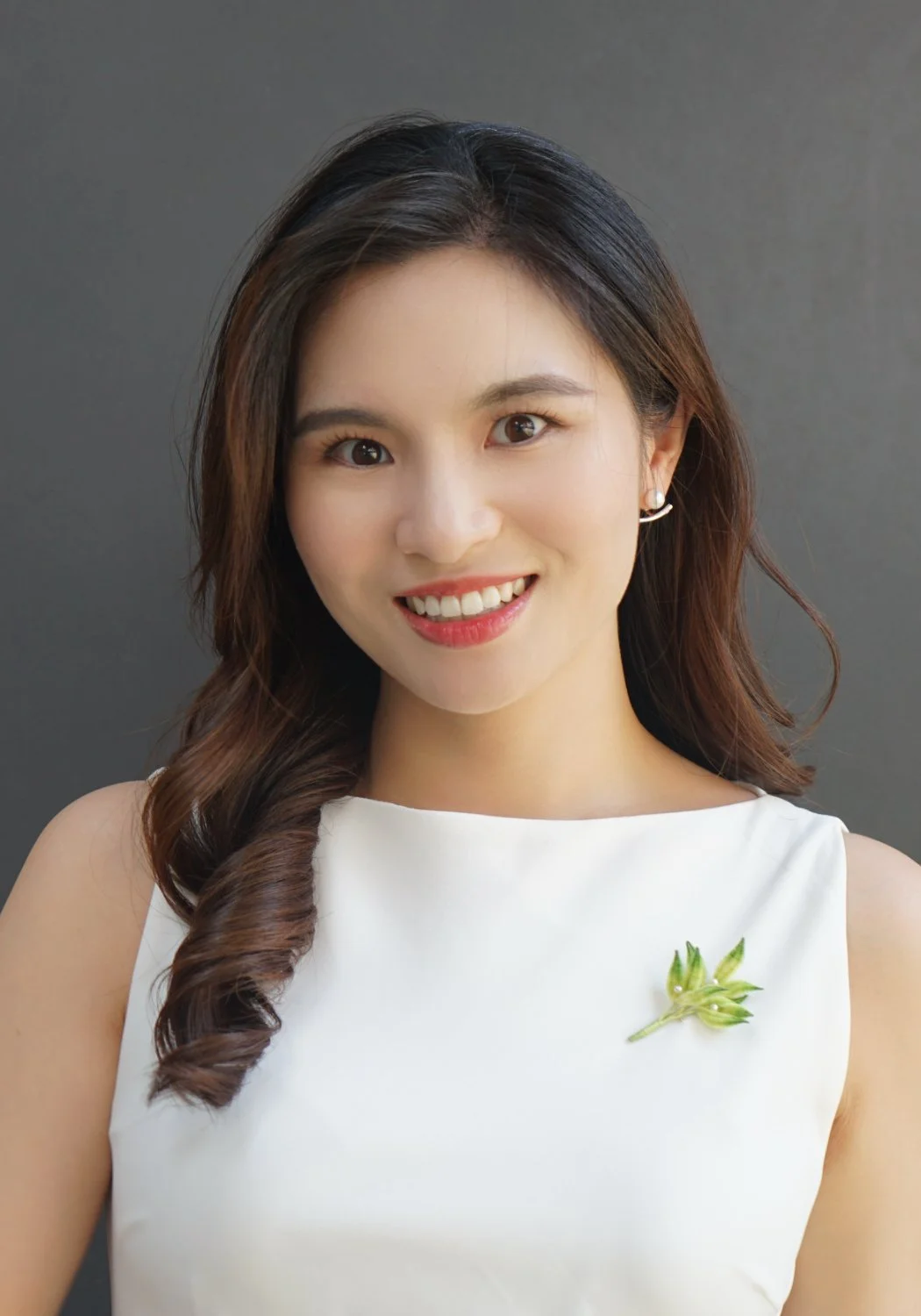
Yulia (Yu) Jiang
Yulia (Yu) Jiang is a bilingual journalist from China studying data journalism at Stanford University. Previously a financial television reporter at CNBC's Asia-Pacific headquarters in Singapore, she aims to make financial and technological developments accessible to everyday audiences and help people across languages and cultures better understand one another.
Born and raised in Shanghai, with family roots in Hubei, Yulia dreamed of becoming a television anchor as a child. She studied journalism and communication at Shanghai Jiao Tong University. As a first-generation college student, she became interested in how media and technology influence learning and opportunity. That curiosity led her to the Harvard Graduate School of Education, where she earned a master's degree in Technology, Innovation, and Education in 2021. She had imagined beginning her career hosting a children’s show. Her path took a different turn, but her interests in education and storytelling continued to shape her work.
Yulia began her journalism career at The Paper, a digital news outlet in Shanghai, as an on-air anchor and general assignment reporter. She covered international affairs, education policy, typhoons, and the Covid-19 pandemic. During Shanghai's 2022 lockdown, she produced an investigation and accompanying video about a couple stranded in the city while seeking medical care. She initiated and hosted a panel discussion bringing Harvard scholar Anthony Abraham Jack into conversation with Chinese educators about students from low-income backgrounds. They explored whether gaining admission to university also meant belonging there. For Yulia, the conversation showed how experiences of education, opportunity, and belonging could resonate across national boundaries.
In 2022, after teaching herself economics and finance, Yulia joined CNBC in Singapore. Over four years, she delivered analytical financial reporting for its Mandarin programming, including CNBC Business Daily and CNBC People of the Week. Her reports covered central bank policy, market dynamics, artificial intelligence, commodity prices, and the human stories behind the data. Her field reporting also covered Singapore’s airshow, inflation, housing, transportation, and vocational education, connecting local developments with broader economic and technological trends.
Her reporting helped Mandarin-speaking audiences understand how distant events could affect their daily lives, from how war fuels inflation to how El Niño threatens Southeast Asian coffee crops and raises the price of a morning latte. In an interconnected economy, she wants people to understand why a distant conflict or a farmer’s struggle matters to them. Making intimidating financial and technological concepts accessible also means keeping the people behind the numbers in view.
At Stanford, Yulia is developing skills in data analysis and multimedia storytelling while rethinking her approach to journalism. As audiences turn to social media, individual creators, and AI chatbots for news, she wants to explore a more conversational style that makes reporting feel personal and relatable. She hopes to unlearn some conventions of television presenting and make room for less polished human voices, including hesitation, uncertainty, and questions still taking shape. She believes this human presence becomes rarer and more valuable as AI mediates access to news. She also sees these changes as a reason to invest in original reporting and develop deeper expertise in specific subjects.
Drawing on her education at Harvard and Stanford and five years of reporting experience, Yulia hopes to build an independent media venture after graduation, centered on in-depth interviews and combining conversations with data analysis and multimedia storytelling. She plans to begin by exploring educational technology and education in the AI era, then broaden her coverage to other topics.
Through her work, Yulia hopes to help audiences make sense of a changing world and better understand one another.
